Precious Human Rebirth
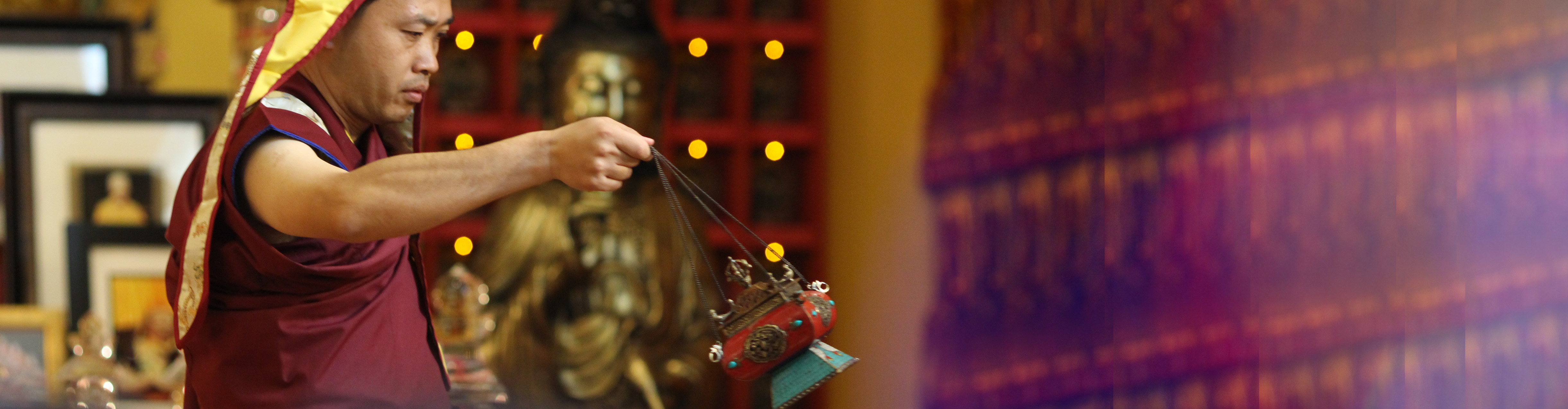 Having a precious human body, being able to come into contact with the Three Jewels, hear the Buddha's teachings, and have the opportunity to learn the true Dharma from the lineage masters of all generations, is an extremely rare and precious human life.
The difficulty of obtaining a precious human rebirth can be discussed from the following four perspectives: the inherent leisure of human nature, the perfection of the special nature of human nature, the analogy of its rarity, and the difference in the number of rebirths.
( 1 ) The nature of thought is leisure
Since we were not born in one of the eight unfavorable conditions, we have the leisure to practice the Dharma, which is called "leisure".
"Unfavorable conditions" refers to the eight unfavorable conditions: "hell, hungry ghosts and animals, remote lands and long-lived heavens, wrong views, not encountering the Buddha's appearance in the world, and being mute."
In terms of the rarity of the "cause," this kind of human body is obtained because of the vows and good deeds made in many past lives, accumulating a lot of merit and resources, so as to come into contact with the Three Jewels, learn the correct teachings, and receive the secrets that are continuously passed down.
If one is born in hell, one suffers from the torment of heat and cold day and night, leaving no time for Dharma practice. If one is born as a hungry ghost, one constantly suffers from hunger and thirst, leaving no time for Dharma practice. If one is born as an animal, one suffers from being enslaved and harming others, leaving no time for Dharma practice. If one is born in a long-lived heaven, one wastes time in a state of mindlessness and thoughtlessness, leaving no time for Dharma practice. If one is born in a remote place, there is no Dharma, so there is no time for Dharma practice. If one is born as a follower of non-Buddhists or becomes one of those who hold wrong views, one's mindstream is defiled by wrong views, so there is no time for Dharma practice. If one is born in a dark age, one cannot even hear the voice of the Three Jewels, nor understand good and evil, so there is no time for Dharma practice. If one is born mute, one's mindstream cannot be tamed, and there is also no time for Dharma practice.
( 2 ) Perfection of Mindfulness Special Method
The perfect method of thinking is divided into two parts: five kinds of self-perfection and five kinds of other-perfection.
The "Five Self-Perfections" include the perfection of the basis, the perfection of the environment, the perfection of the root virtues, the perfection of the intention, and the perfection of faith.
Having attained a precious human rebirth, one's "foundation is perfect." Born in the Central Land where Buddhism flourishes, one's "environment is perfect." With all faculties complete and without obstacles to practice, one's "faculties are perfect." Having developed faith and understanding in wholesome practices, one's "intention is perfect." Now that one's mind has entered into the Dharma, one's "faith is perfect." These five perfections are what one should possess, and are called the "five self-perfections."
The "five kinds of other perfections" include the appearance of the Tathagata, the Buddha's teachings, the Dharma's continued existence in the world, one's own entry into the holy teachings, and being accepted by a teacher.
Now, in this auspicious eon, the Buddha has appeared in the world, making this a supremely perfect teacher. The Buddha has already turned the Wheel of Dharma three times, making the true Dharma of Buddhism perfect. The Dharma's time in the world is not yet complete, making this a perfect time. Having entered the Buddhist path, my own karmic connection is perfect. Having been accepted by a virtuous teacher, my supreme compassion is perfect. These five perfections depend on external conditions to be fulfilled and are called the "Five Other-Completed Perfections."
One who possesses all eighteen kinds of freedoms and advantages, including the eight freedoms and advantages and the ten perfections, in their own mindstream can be called a human body with the eighteen freedoms and advantages. In addition, the eight unfavorable conditions for temporary birth and the eight unfavorable conditions for severing mental ties, and not being swayed by the sixteen adverse conditions, are also very important.
Temporary birth of eight flawless conditions
The eight unfavorable conditions of temporary rebirth are "held by the demons of the five poisons and ignorance, laziness and evil deeds surge like the sea, and follow the false appearance of the Dharma for salvation."
"The five poisons are very strong" - hatred towards enemies, attachment to relatives and friends, etc. People with very strong afflictions of the five poisons may temporarily have the idea of practicing the Dharma, but because the power of the five poisons in their mindstream is strong and their afflictions are numerous, it is difficult for them to practice the Dharma.
"Ignorance" - an extremely foolish person who has no wisdom or light. Although they enter the Buddhist path, they cannot understand the true Dharma and have no opportunity to hear, contemplate, and practice it.
"Being possessed by demons" - When one's views are distorted and demonic obstacles appear, one's mind turns to the wrong path, and one's views and actions violate the true Dharma.
"Sloth and laziness" - wanting to study the true Dharma, but often being lazy and indolent, unable to diligently practice the true Dharma.
"Evil karma emerges" - Those with heavy evil karma and sins, even if they diligently practice the Dharma, will not generate merit in their minds and will develop aversion to the Dharma.
"Being manipulated by others" means being someone who wants to practice the Dharma but cannot get the opportunity to do so.
"Seeking happiness and relief from fear" - those who practice Buddhism for the sake of food and clothing in this life or out of fear of being harmed by others, without a firm understanding of the true Dharma.
"Pretending to practice Dharma" – those who pretend to practice Dharma in order to gain fame and fortune only pursue worldly benefits and are far from the true path to liberation.
The above eight types are also those who have no time to practice the Dharma.
The Eight Flaws of Severing Attachments
The eight unfavorable conditions for severing the mind are: "being tightly bound to the most inferior present state, having no aversion to samsara and little faith, engaging in unwholesome and evil deeds, having a mind that is far from the Dharma, and having lost the vows and samadhi."
"Bound by present possessions" - Bound by worldly possessions and relatives, working hard all day for profit, with no time to practice the Dharma.
"Bad personality" - Because of the bad nature of one's own mind, even if one encounters a true spiritual teacher, it is difficult to turn to the right path.
"Without renunciation" means not having fear of the lower realms and the faults of samsara, and not generating renunciation.
"Without true faith" - Without faith in the Dharma and the guru, one cannot enter the path to liberation.
"Favoring evil deeds" means having a preference for unwholesome and evil actions, staying away from virtuous deeds, and going against the Dharma.
"Mind straying from the Dharma" means having no interest in the Dharma and being unable to generate merit in one's mindstream.
"Breaking the vows" - After taking refuge, one breaks the motivation and vows, which can only lead to rebirth in the lower realms and cannot be liberated from the unfavorable place.
"Breaking a vow" means damaging the Samaya vows, which harms oneself and others and severs the conditions for achieving enlightenment.
These eight flawless and sacred practices are called the "Lamp of Cessation and Liberation".
( 3 ) The metaphor of "rare" thinking
Through metaphor, we contemplate how precious human life is.
Nagarjuna Bodhisattva instructed King Blissful Conduct, "It is extremely rare to encounter a tortoise floating on the ocean with a wooden yoke hole. It is even more difficult for an animal to be reborn as a human. Therefore, Your Majesty, by practicing the Dharma, you will attain the superior result."
Shantideva also said, "Like a blind turtle in the sea with its neck stuck in the hole of a yoke, a human body is even more difficult to obtain." The Nirvana Sutra also describes how "beans scattered on a smooth wall cannot adhere" and "beans piled on the tip of a needle cannot be retained," thus showing how extremely difficult it is to obtain a human body.
( 4 ) The difference in thinking about numbers
By observing the number and order of sentient beings, one can contemplate that obtaining a human body is truly unique.
The Buddha taught that "the beings in hell are like the dust of the earth, the beings in the hungry ghost realm are like the sands of the Ganges, the animals are like wine dregs, the Asuras are like a vast snowstorm, and humans and gods are merely like the dust on a fingernail."
The Buddha taught that "the beings in hell are like the dust of the earth, the beings in the hungry ghost realm are like the sands of the Ganges, the animals are like wine dregs, the Asuras are like a vast snowstorm, and humans and gods are merely like the dust on a fingernail."
To use a metaphor of "number," the number of beings in the hell realm, hungry ghost realm, and animal realm is as numerous as the sands of the desert, while the number of beings in the heavenly realm and human realm is as few as the grains of sand on a fingernail. Among the heavenly beings and humans, those who possess the eighteen freedoms and advantages (i.e., the eight freedoms and ten perfections) and are able to come into contact with the Three Jewels and actually learn the Dharma are as rare as the stars in the daytime.
After such careful reflection, one will surely understand that a precious human rebirth is not obtained by chance or luck, but is the result of accumulating merit and wisdom over countless lifetimes. By truly understanding the rarity of a human rebirth, and becoming aware of and correcting one's attachments and habitual tendencies, afflictions and suffering will naturally decrease.
-
-
-
-
-
- Vows and Precepts
- Preliminary Foundations of the Path
- Generation Stage
- Meditation Practice
- Precious Human Rebirth
- Impermanence of All Things
- Infallible Cause and Effect
- Suffering of Samsara
- Liberation and Benefit
- Reliance on the Guru
- Refuge
- Prostration
- Generate Bodhicitta
- Vajrasattva Mantra Practice
- Accumulating Merit
- Guru Yoga
-
-
-
-